In one sentence: AI is not here to replace teachers. It is here to be your “super teaching assistant,” like a well-read intern with little life experience. It can help with many things, but it needs your guidance and judgment.
🤔 Have you noticed? AI has quietly moved into our classrooms
Remember the automatic summary that appeared at the top of your Baidu search results when you searched “middle school biology photosynthesis lesson”? Or the “AI-generated courseware” button you clicked in Seewo Whiteboard (希沃白板)? Or the app on your phone that helped you draft a parent meeting notice?
AI is no longer a concept from science fiction. It has seeped into everyday teaching like air. As K12 teachers, we are rooted in national curriculum standards while also embracing multicultural perspectives. Facing this technological wave, what we need is neither fear nor blind enthusiasm, but rational understanding plus practical skills.
🤖 What is generative AI? A familiar analogy
Imagine you have a very capable intern. They:
- Have read almost every book, article, and paper in the world
- Can draft a full lesson plan in 30 seconds
- Can instantly generate a diagram of a plant cell
- Can give personalized revision suggestions for every student’s essay
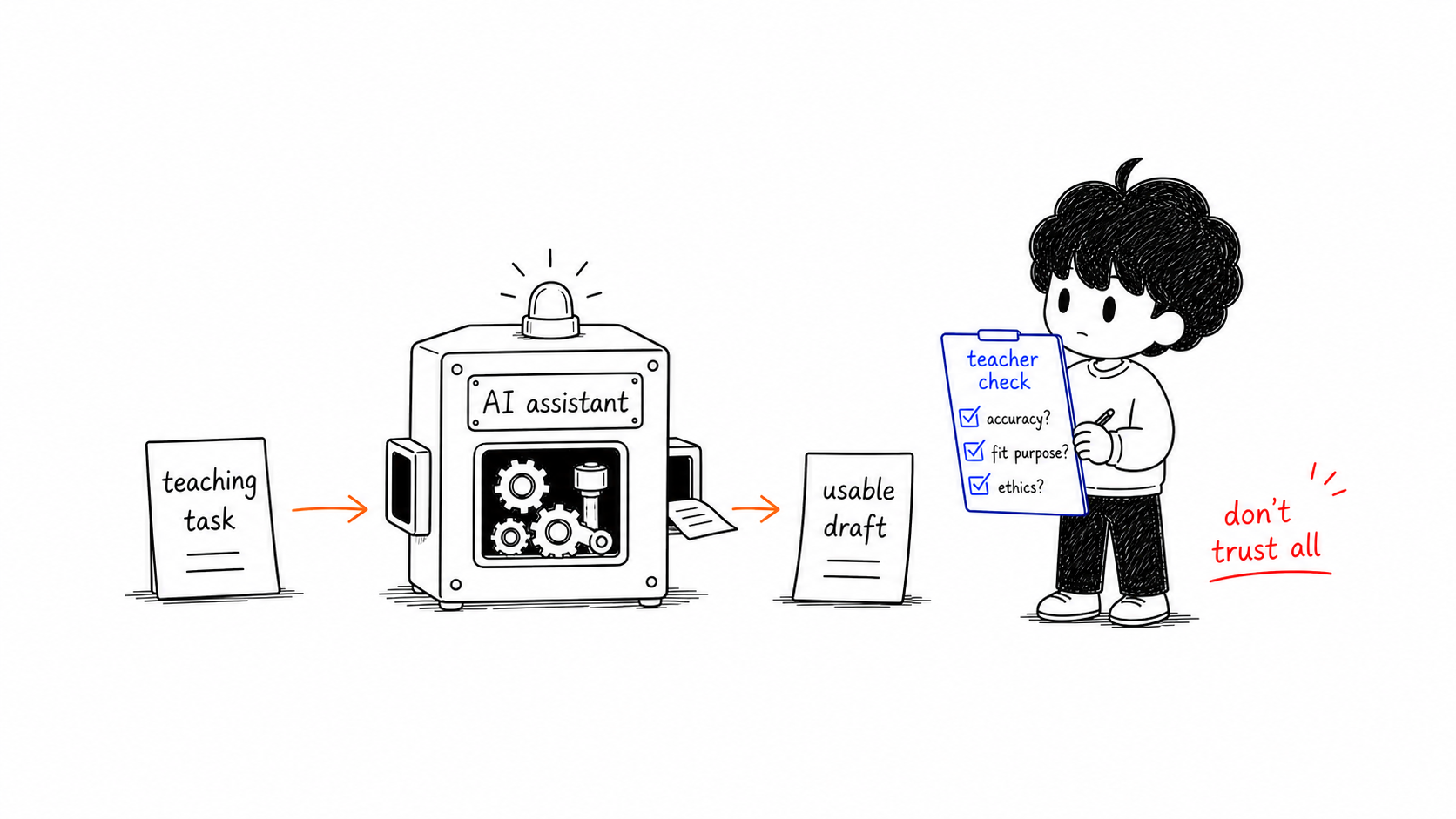
But at the same time, this intern:
- Has never actually been a teacher and does not understand a real classroom
- Sometimes tells you wrong information with great confidence
- Has no values of its own and can only imitate human expression
- May unintentionally reproduce stereotypes
That is generative AI: a powerful “knowledge repeater plus association engine.” It can generate new content from massive amounts of data, but it does not truly understand or judge.
🔍 How does generative AI work? Simple enough for middle school students
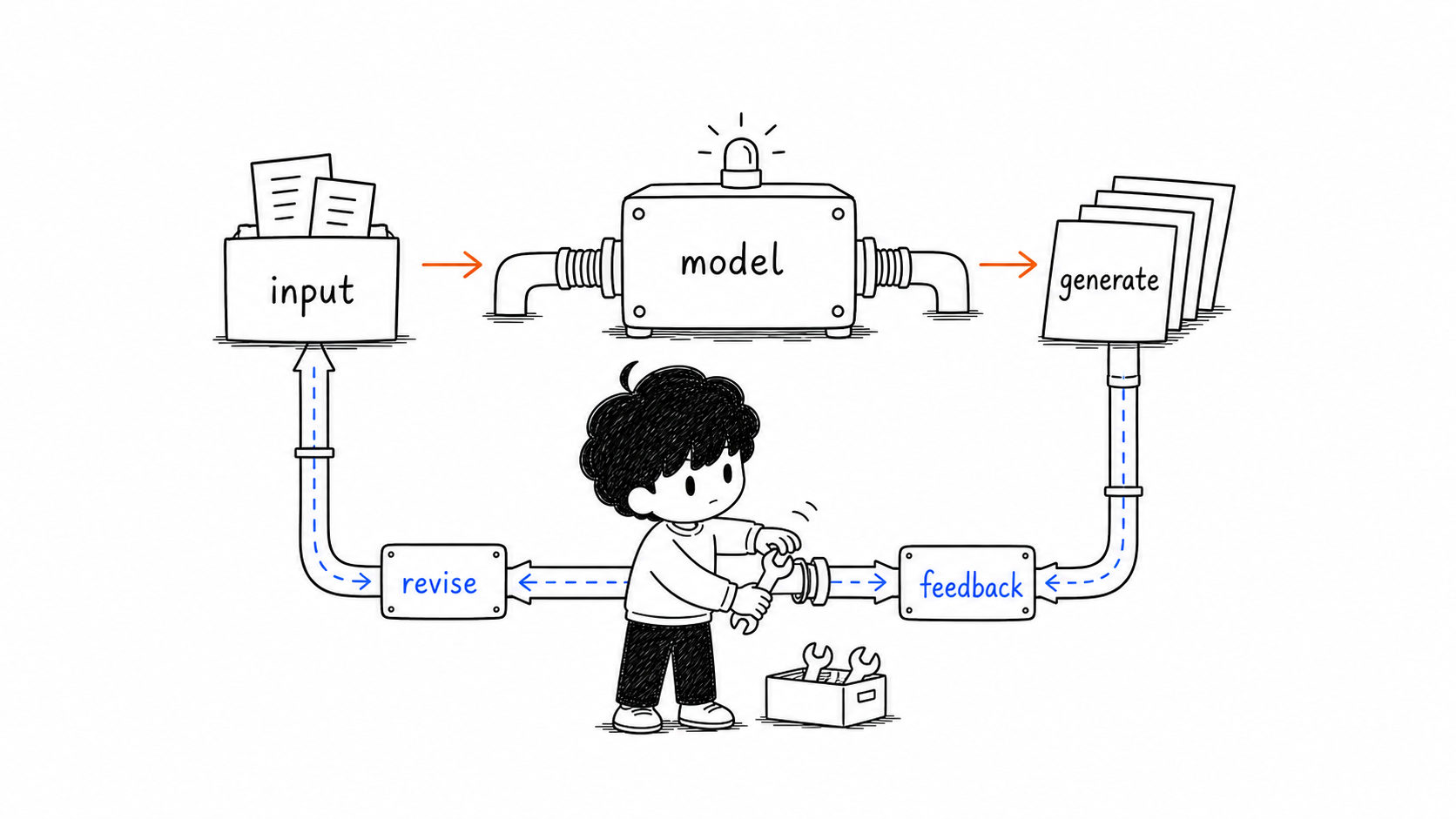
AI is not magic. Its working logic is actually simple:
- It “eats” data: AI learns by “reading” huge amounts of text, images, and video.
- It finds patterns: it notices that when people say “spring,” they often continue with “everything comes back to life” or “full of vitality.”
- It predicts a response: when you ask a question, it predicts how humans are most likely to answer based on the patterns it has learned.
- It generates content: based on that prediction, it creates new text, images, or video.
A real classroom example:
A Chinese language teacher asks AI: “Please design an interactive activity for Zhu Ziqing’s Spring (《春》).”
The AI’s “thinking process” might be:
- “Spring is a seventh-grade text about descriptions of spring.”
- “Middle school Chinese classes often use interactive experiences.”
- “I have seen teachers ask students to close their eyes, imagine, and use the five senses.”
- “Zhu Ziqing is especially good at sensory description.”
So it generates: “Ask students to close their eyes, play soft music, guide them to imagine the feeling of spring wind brushing across their faces, and then write one sentence about their feeling…”
But here is the problem: AI may not know how many students are in your class, that the room may be noisy, or that some students may not be able to quietly imagine. This is why the teacher is always the leader.
🛡️ Safety reminder: not every AI tool is suitable for classrooms
As teachers, we should embrace technology while choosing carefully. The following tables select several representative AI tools in China. Teachers still need to explore newer and overseas tools, along with their technical features and practical uses, according to their own teaching contexts.
📝 Text tools
| Tool | Best for | Strength | Practical example |
| Qwen (通义千问) | Chinese, moral education, history lesson planning, interdisciplinary project design | Strong Chinese comprehension, supports textbook image uploads, has education-specific roles | In the app, tap “Roles” and choose “middle school Chinese teacher” for more professional output |
| Kimi (Moonshot AI / 月之暗面) | Long text analysis, full test paper review, paper reading | Supports very long context; can analyze a class set of essays in PDF form | Remember to remove student names before uploading essay sets |
| ERNIE Bot (文心一言) | Advisory lessons, parent letters, moral education materials | Built-in value review, lower risk, many templates | Use “Wenxin agents” (文心智能体) to create your own homeroom teacher assistant |
| iFlytek Spark (讯飞星火) | Bilingual teaching, speech transcription, speaking materials | Accurate speech recognition, supports mixed Chinese-English input | Transcribe student speaking recordings and ask AI to review grammar |
| DeepSeek (深度求索) | Science reasoning, math derivations, coding support | Strong logical reasoning and clear steps | Ask it to “explain the Pythagorean theorem in a way middle school students can understand” |
| Doubao (豆包) | Light daily tasks: notices, checklists, classroom mini-games | Clean interface and fast response | Ask directly: “Design a five-minute idiom chain warm-up game for class” |
| Tencent Hunyuan (腾讯混元) | School event planning and holiday advisory lessons | Connects with the WeChat ecosystem | Try “generate a Mother's Day gratitude action list for seventh grade” |
| 360 AI Brain (360智脑) | Policy interpretation, safety education, current affairs in teaching | Strict content review, suitable for cautious wording | Turn the Regulations on the Protection of Minors Online (《未成年人网络保护条例》) into student-friendly language |
🎨 Multimedia tools
| Tool | Best for | Strength | Practical example |
| Tongyi Wanxiang (通义万相) | Science diagrams, historical scenes, concept visuals | Generates teaching images such as cell structures, Silk Road caravans, or circuit diagrams | Add “educational illustration + simple drawing style” to avoid overly artistic results |
| CapCut / Jianying (剪映) | Micro-lesson videos, concept animations, class activity recaps | Turns text into video with voiceover, subtitles, and background | Use smart cutout to place a student reading video into an ancient poetry scene |
| Jimeng AI (即梦AI) | Worksheets, classroom posters, encouragement cards | Quickly generates certificates for “reading star” or “math expert” | Search education templates, replace text, and export quickly |
| Meitu Design Studio (美图设计室) | Class culture walls, holiday decor, project boards | Useful for themed posters such as Qingming customs or aerospace spirit | Upload the school logo to keep visual consistency |
| Tencent Zhiying (腾讯智影) | Teacher avatar lecture videos and AI voiceover | Turns a recorded explanation into a digital teacher video | Suitable for flipped classrooms and pre-class viewing |
⚠️ Important safety reminders
- Never upload student names, grades, family information, or unreleased exam content.
- De-identify before use: if you need to analyze student work, remove personal information first.
- Check values: AI may generate content that does not fit multicultural educational values, so teachers must review it.
- Keep copyright awareness: AI-generated images and text may carry copyright risks, especially for commercial use.
Real case: A history teacher asked AI to generate teaching materials about the Silk Road. The AI mainly showed exchanges between China and Europe and ignored Central Asia, South Asia, and other regions. The teacher added those perspectives, making the lesson more inclusive.
💡 Why do middle school teachers need to understand AI?
In today’s diverse K12 environment, students may follow domestic exam pathways or move toward international admissions. Either way, digital literacy is essential. As teachers, we need to:
🌱 Create value for students
- Learning support: help students understand difficult points and provide personalized resources
- Skill development: teach students how to collaborate with AI rather than depend on it
- Critical thinking: cultivate the ability to judge whether information is true or false
🌱 Reduce our own workload
- Faster lesson preparation: generate a first draft of teaching materials, then you improve it
- Assignment review: let AI screen grammar errors while you focus on ideas
- Home-school communication: draft parent notices and learning analysis frameworks
⚡ Three traps AI may lead you into
Trap 1: Confident nonsense (AI hallucination)
Case: A teacher asked AI to introduce the Four Great Inventions of ancient China. AI confidently listed papermaking, printing, the compass, gunpowder, and the steam engine. The steam engine belongs to the British Industrial Revolution.
How to respond:
- Three-step verification: check the textbook → consult authoritative sources → ask experienced colleagues
- Classroom activity: play “AI detective” with students and look for errors in AI-generated content
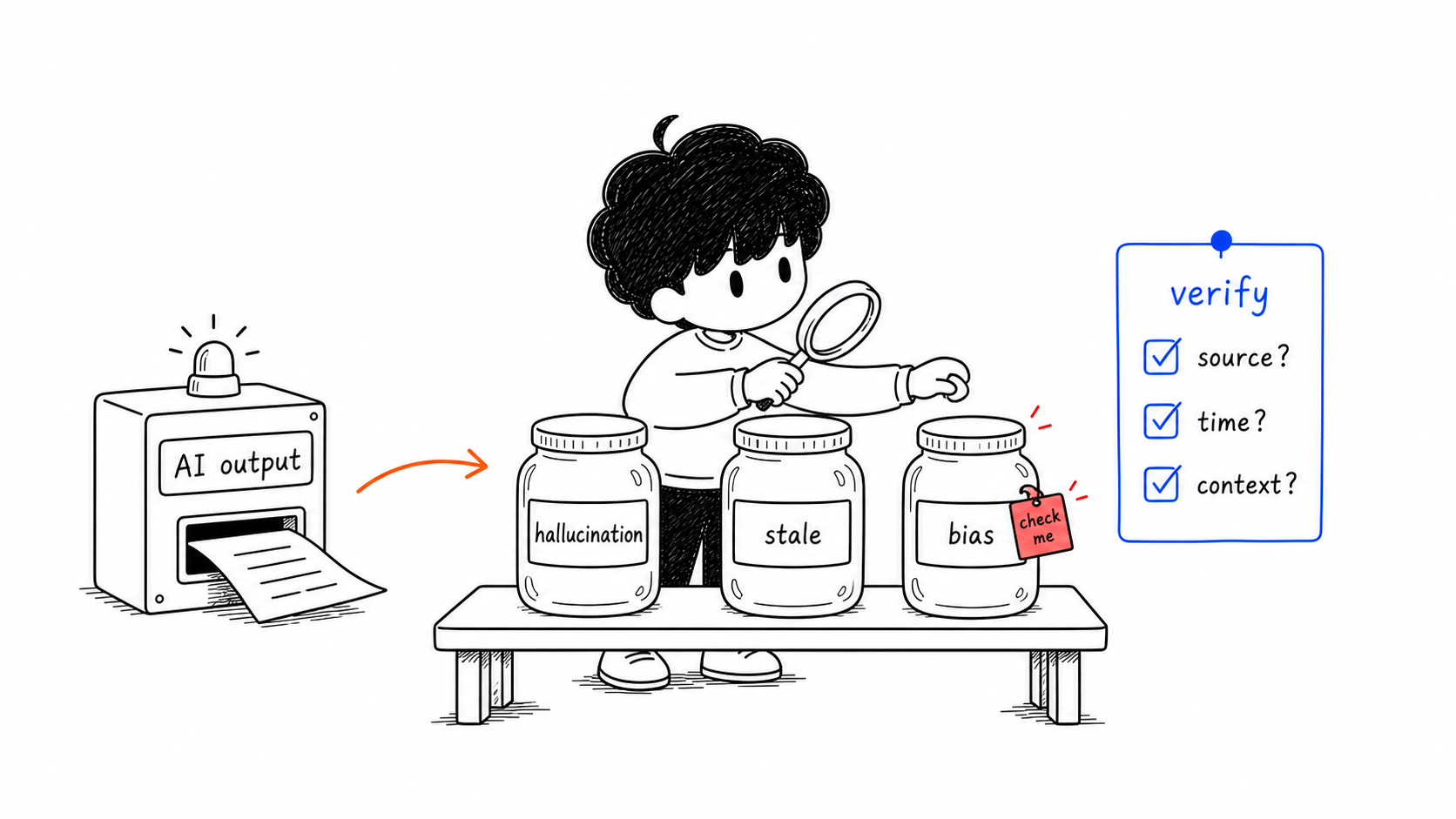
Trap 2: Outdated knowledge
Case: In 2024, one AI tool still did not know about new curriculum standards and generated lesson designs that did not fit the latest requirements.
How to respond:
- Check the tool’s training cutoff date
- Use the latest textbook as the authority for core knowledge
- Check important policy information on the Ministry of Education website
Trap 3: Hidden bias
Case: When asked to describe a “scientist,” AI produced mostly male images; when asked to describe a “nurse,” it produced only women.
How to respond:
- Ask critically: “Is this description complete? Has it ignored any groups?”
- Request diverse examples across cultures, genders, and backgrounds
- Turn bias into a learning moment: “Why would AI think this way?”
🚀 Next step: AI is not the destination, but the starting point
As frontline teachers, we will not let AI decide the direction of education. We will make it a tool for realizing our educational ideals. Remember:
✅ AI is the assistant; the teacher is the director
✅ Tools can change; the purpose of education remains
✅ Technology becomes outdated; thinking does not
This article belongs to Generative AI Handbook for Frontline Teachers (《一线教师的生成式AI手册》). See the series index for source, reference, and AI-use notes.